Categories

Common Agricultural Film Problems and How to Prevent Them |NAIGU

Learn about common agricultural film problems, including tearing, UV aging, uneven thickness, condensation, and deformation, and discover practical ways to improve film performance and service life.
Oct 16th,2026 52 Views
Agricultural film plays an important role in modern farming, helping regulate temperature, retain soil moisture, control weeds, and protect crops from changing weather conditions. However, poor film quality, incorrect installation, and unsuitable material selection can reduce its service life and affect agricultural productivity.
Understanding common agricultural film problems and how to prevent them helps farmers, agricultural distributors, and greenhouse operators improve film performance and reduce replacement costs.
1. Agricultural Film Tears Easily
Tearing is one of the most common problems with agricultural film. Thin film, uneven thickness, excessive tension during installation, and contact with sharp objects can cause tears or holes. Strong winds and heavy rain may also worsen existing damage.
How to prevent it:
  • Choose agricultural film with suitable thickness and tensile strength for the intended application.

  • Check the film for visible defects before installation.

  • Remove sharp objects from the installation area.

  • Avoid excessive tension when stretching and securing the film.

  • Select reinforced or heavier-duty film when environmental conditions require it.

For large greenhouses and farms, consistent film quality is essential for reliable, long-term performance.
2. Premature Aging Under Sunlight
Agricultural film is often exposed to direct sunlight for extended periods. Without sufficient UV stabilization, plastic film may become brittle, lose flexibility, discolor, or crack before the end of its expected service life.
How to prevent it:
  • Select UV-stabilized agricultural film designed for outdoor use.

  • Confirm the expected service life and local sunlight conditions with the supplier.

  • Choose materials suitable for the region's climate and growing season.

  • Follow the manufacturer's recommendations for installation and storage.

UV resistance is particularly important for greenhouse covers and agricultural films used in regions with intense sunlight.
3. Uneven Film Thickness
Uneven thickness can lead to inconsistent strength and performance. Thinner areas may tear more easily, while variations across the film roll can create problems during installation and reduce material efficiency.
How to prevent it:
  • Work with manufacturers that maintain consistent production quality.

  • Confirm the specified thickness and acceptable tolerances before ordering.

  • Request product samples or quality inspection reports when necessary.

  • Check thickness consistency during incoming material inspections.

Reliable thickness control helps agricultural film manufacturers deliver products that meet different farming requirements.
4. Poor Light Transmission
Greenhouse film needs suitable light transmission to support crop growth. Dust, surface degradation, condensation, and inappropriate material selection can reduce the amount of light reaching plants.
How to prevent it:
  • Choose film with appropriate light transmission properties for the crop.

  • Consider anti-drip or anti-fog options where condensation is a concern.

  • Clean greenhouse film according to the manufacturer's recommendations.

  • Replace film when aging or damage significantly affects its performance.

The right film specification depends on crop type, greenhouse design, local climate, and growing conditions.
5. Condensation and Water Droplets
Moisture can condense on the inner surface of greenhouse film when temperature and humidity conditions change. Water droplets may reduce light transmission and drip onto crops, potentially increasing the risk of certain plant diseases.
How to prevent it:
  • Consider agricultural film with anti-drip or anti-fog properties.

  • Maintain suitable greenhouse ventilation.

  • Manage indoor humidity and temperature.

  • Select film designed for greenhouse applications rather than relying only on general-purpose plastic film.

Not every agricultural application requires anti-drip performance, so buyers should evaluate their growing environment before selecting a product.
6. Film Shrinkage or Deformation
Agricultural film may shrink, wrinkle, or deform due to temperature fluctuations, excessive installation tension, unsuitable material properties, or inadequate fixation.
How to prevent it:
  • Select film suitable for the expected operating temperature range.

  • Follow the recommended installation and fastening methods.

  • Avoid excessive tension during installation.

  • Confirm that the film is compatible with the greenhouse structure and intended use.
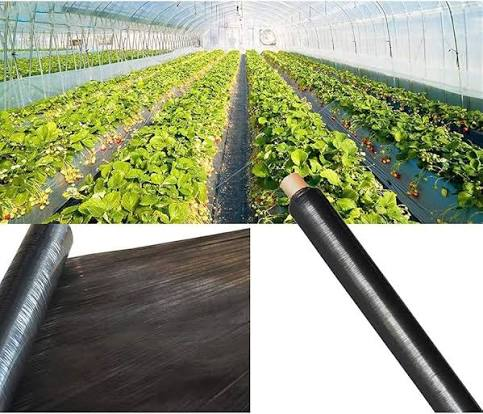
Correct installation and material selection help maintain stable coverage throughout the growing season.
7. Choosing the Wrong Agricultural Film
Different agricultural applications require different film properties. Greenhouse covers, soil mulch films, silage covers, and UV-resistant crop protection films have different performance requirements. Choosing a product based only on price may lead to premature failure or unnecessary material costs.

How to prevent it:
Before purchasing agricultural film, evaluate the following factors:
  • Application: Greenhouse covering, soil mulching, silage protection, or other agricultural uses.

  • Thickness: The required thickness based on mechanical strength and application conditions.

  • Material: Suitable polyethylene formulations and other specified material properties.

  • UV resistance: Appropriate stabilization for outdoor exposure.

  • Optical properties: Light transmission, diffusion, or other crop-specific requirements.

  • Roll specifications: Width, length, and packaging requirements for efficient installation and transportation.

Providing clear specifications helps manufacturers recommend suitable film solutions and prepare accurate quotations.
How to Improve Agricultural Film Performance
Preventing agricultural film problems starts with selecting the right material and working with a reliable manufacturer. Buyers should evaluate film thickness, mechanical strength, UV resistance, and application requirements together rather than focusing on a single specification.
For agricultural film manufacturers and distributors, consistent extrusion quality, appropriate raw material selection, and effective quality control are also essential for maintaining product reliability.
At NAIGU Films, we provide plastic film solutions for different industrial and agricultural applications. Contact our team to discuss your required film specifications, roll dimensions, and application needs.
Contact NAIGU Films
Looking for a reliable agricultural film supplier? Share your application, required thickness, film width, roll length, and UV resistance requirements with our team.
We can help you evaluate suitable film specifications for your agricultural projects and bulk purchasing needs.
Contact NAIGU Films today to discuss your requirements and get a customized quotation.
📧 Email: jenney@gdnaimei.com
📱 WhatsApp/Phone: +86 13924835577
🌐 Website: https://naigufilms.com/
Leave a message
Name *
Email *
WhatsApp/Phone
Total weight (kg) *
Message *
Company Name
We use Cookie to improve your online experience. By continuing browsing this website, we assume you agree our use of Cookie.